

ll lavaggio metalli é un processo che ha per obiettivo la rimozione dai manufatti industriali dei contaminanti organici, come oli, grassi, ecc. e dei residui solidi, come trucioli, polveri, abrasivi, ecc, depositatisi sulla superficie in seguito alla loro produzione, lavorazione e/o trattamento.
Il lavaggio è una fase fondamentale del processo produttivo con conseguenze non solo sulle successive lavorazioni e/o montaggi, ma anche sulla funzionalità e sulla qualità del prodotto finale.
Cosa si può lavare? TUTTO!
I campi di applicazione sono numerosissimi: sotto sono elencati alcuni dei più comuni processi da cui, in genere, provengono i pezzi da lavare.
ILSA-MC realizza linee specifiche di impianti funzionanti con diverse famiglie di prodotti di lavaggio, mettendo così a disposizione del cliente un ampio ventaglio di scelte per trovare la soluzione più idonea ai pezzi da trattare e ai contaminanti da rimuovere.
| Alcool Modificati |
Idrocarburi Alifatici |
Solventi Clorurati |
Solventi Fluorurati |
|
|---|---|---|---|---|
| Densità [kg/L] | 0,88 | 0,77 | 1,62 | 1,30 |
| Calore di vaporizzazione [kJ/kg K] | 1,98 | 2,21 | 0,88 | 1,34 |
| Calore specifico [J/g] | 320 | 260 | 240 | 261 |
| Temperatura di ebollizione [°C] | 161 | 180 | 121 | 48 |
| Punto di infiammabilità [°C] | 61 | >61 | - | - |
| Tensione di vapore a 20°C [mB] | 1,3 | 1 | 19 | 350 |
| Tensione superficiale a 25°C [mN/m] | 26,1 | 25,1 | 32 | 21,7-24 |
| Indice Kauri-butanolo (Kb) | >200 | 29 | 90 | 118 |
Il ciclo di pulizia può essere strutturato in modi differenti, combinando diverse azioni di lavaggio per permettere al solvente di miscelare i contaminanti organici e per rimuovere meccanicamente i contaminanti solidi. Queste fasi possono essere identificate in spruzzaggio (pre-lavaggio), immersione totale, ultrasuoni, getti laterali ad alta pressione, sgrassaggio con vapori di solvente e asciugamento completo. Se necessario, dopo il lavaggio è possibile inserire una fase di applicazione di un olio protettivo per quei materiali soggetti a ossidazione.
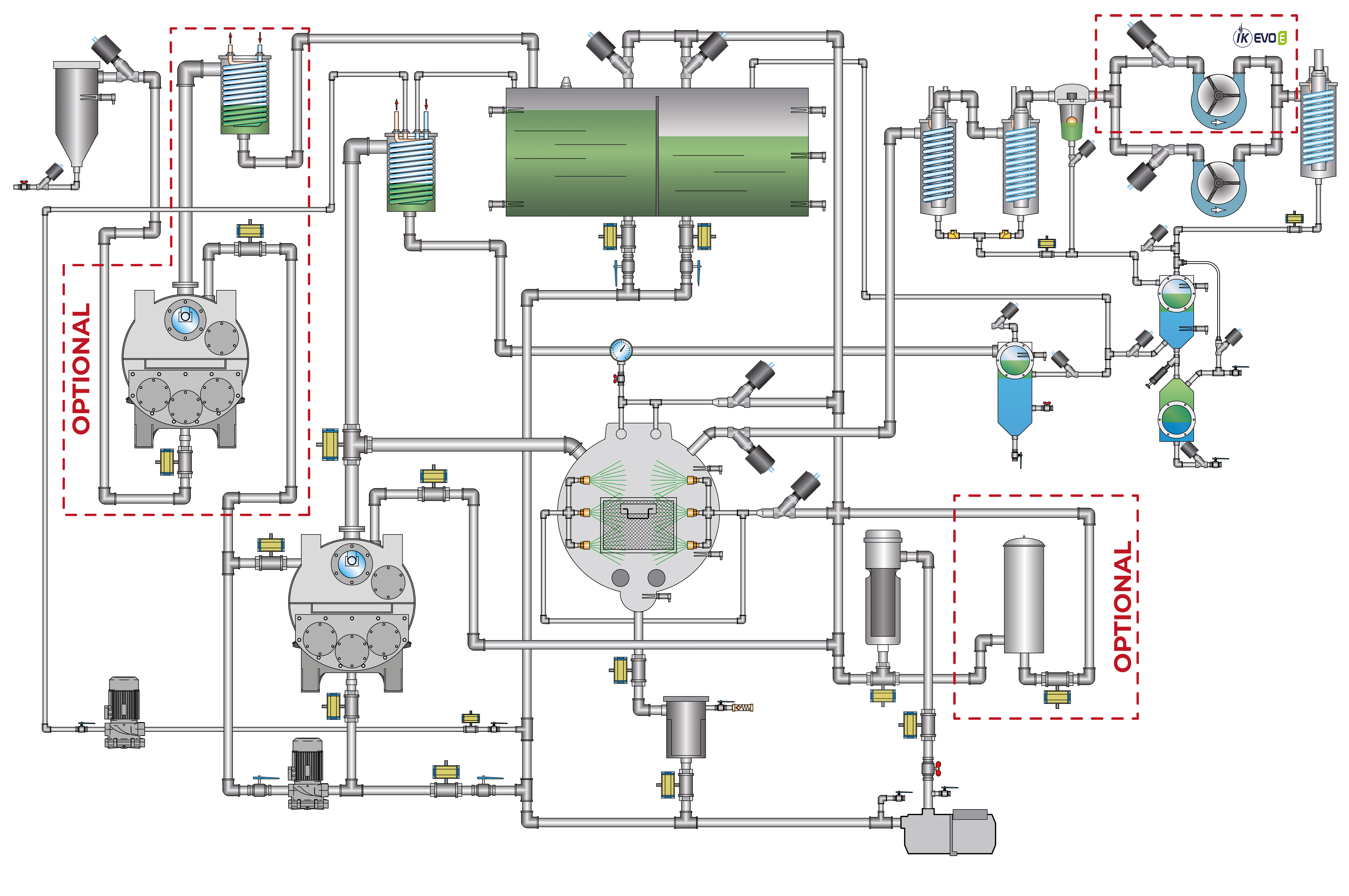
I pezzi da lavare vengono generalmente introdotti negli impianti di lavaggio tramite appositi cesti/telai di diverse dimensioni e forme. In funzione delle caratteristiche dei prodotti e dei cesti/telai, i pezzi possono essere introdotti alla rinfusa oppure posizionati o addirittura fissati, per consentire comunque la movimentazione del carico anche in presenza di pezzi delicati. Per mantenere i pezzi nella posizione di carico, per fissarli o semplicemente per limitarne il movimento, possono essere utilizzati coperchi parzializzatori o appositi supporti di posizionamento (pin).
I cesti contenenti i pezzi vanno a generare “il carico” con diverse possibilità di combinazione per ottimizzare l’utilizzo del volume complessivo della camera di trattamento.
Una volta introdotto, il carico viene bloccato, in modo automatico o manuale, all’interno della macchina.
L’inserimento e l’estrazione del carico possono avvenire manualmente, con l’ausilio di rulliere e piattaforme, o abbinando alla macchina sistemi automatici o robotizzati, eventualmente
completi di polmonature, sia in ingresso per i pezzi sporchi che in uscita per i pezzi puliti.
In base alle esigenze e alle caratteristiche dei pezzi, il carico in macchina può essere ruotato di
360° sull’asse orizzontale,
fatto basculare con velocità e angoli regolabili o fatto rimanere statico.
Le modalità di rotazione e basculamento sono liberamente programmabili, così come la possibilità di lasciare fermo
il carico.
Questa soluzione consente di uniformare movimenti ed esposizione del carico alle fasi del ciclo di lavaggio anche in configurazioni multicesto.
È possibile dotare la macchina di un sistema di chiusura superiore del cesto per svincolarsi dall’obbligo di inserire i coperchi
ad ogni carico (in base alle dimensioni dei pezzi trattati); alcuni modelli di macchina hanno questo sistema nella dotazione di serie.
La programmazione e il controllo del ciclo di lavaggio vengono effettuati tramite un PLC Siemens e un software progettato internamente appositamente per l’utilizzo su impianti di lavaggio ILSA-MC.
È possibile gestire tutti gli aspetti funzionali e le informazioni dell’impianto (storicità eventi, storicità allarmi, storicità cicli, set up, programmi di manutenzione, ecc).
Tutte queste attività possono essere svolte anche tramite ethernet, con cui è possibile usufruire del servizio di assistenza on-line.
ILSA-MC è inoltre in grado di fornire tutti i dispositivi ed i servizi di corredo per la realizzazione di un pacchetto “chiavi in mano” di asservimento e gestione degli impianti di lavaggio.
ILSA-MC pone da sempre al centro della propria azione di ricerca e sviluppo, l’ottimizzazione e l’incremento delle più assolute condizioni di sicurezza e di tutela dell’ambiente, quindi del rispetto delle norme che regolano l’utilizzo degli impianti di lavaggio.
Un esempio dell’attenzione ai consumi energetici, quindi all’ambiente, è il sistema denominato “ILSA-MC OE” che, attraverso un’idonea realizzazione idraulica e ad una gestione software automatica, consente di gestire e sfruttare i vapori di solvente generati nel distillatore sia per lo sgrassaggio dei componenti da lavare, che per il riscaldamento dell’impianto, riducendo sia i consumi elettrici che l’energia impiegata per la condensazione dei vapori stessi.
La configurazione “Plug&Play” integra un sistema di condensazione con scambiatore ad aria che elimina ogni tipo di connessione ad acqua esterna per il raffreddamento o a dispositivi aggiuntivi come chiller o torri di raffreddamento.
Con l’utilizzo di appositi cicli di manutenzione automatici e accortezze costruttive e logiche, ILSA-MC assicura di diminuire il più possibile la presenza di emissioni diffuse di solvente: i filtri vengono asciugati e drenati prima della loro pulizia e sostituzione; il sistema di condensazione garantisce un’emissione in atmosfera ben al di sotto dei limiti di legge.
Meno emissioni e meno consumi si traducono in rispetto per l’ambiente, minore spreco di solvente e costi di gestione dell’impianto inferiori.

 Italiano
 English
 Français
 Deutsch
 Español